

Blog / Hyundai Kona for Sale

A Buyer's Guide to the 2026 Kona

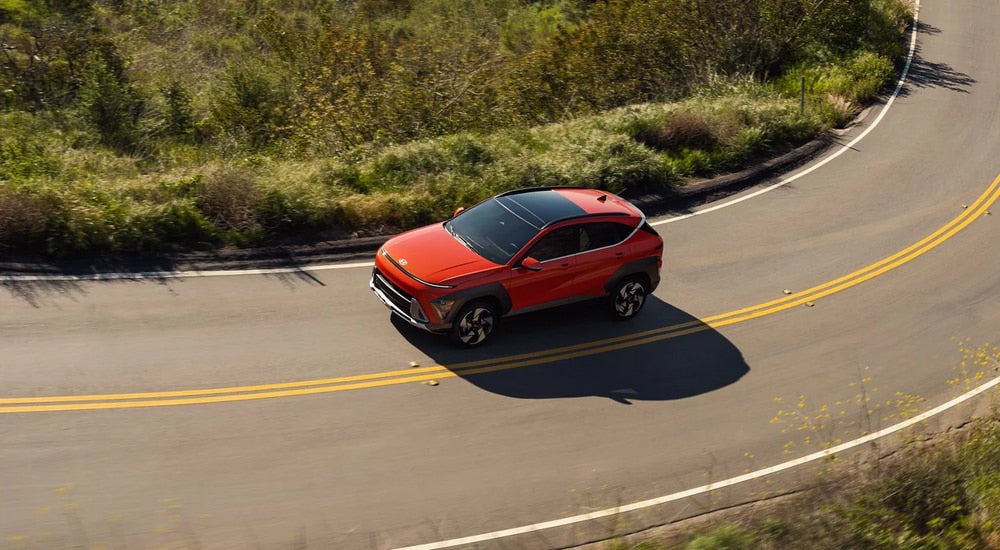
Orange 2026 Hyundai Kona driving on a winding road

Are you looking for a small SUV that's affordable and practical, yet offers the fun you desire behind the wheel? It's time to discover the Hyundai Kona for sale at Rusty Wallace Hyundai. Although it may be subcompact in size, this modern crossover SUV is big on attitude. For good measure, the Kona has one of the most distinctive appearances of any automobile, making you stand out and showcasing your commitment to the total package from your SUV.

The 2026 model continues to hit the mark for packing the things you need and want into one stylish vehicle. Young professionals, recent graduates, and other city-dwellers on a budget can get more than they ever thought possible from a new SUV, all while being backed by one of the industry's leading powertrain warranties. If you're considering the 2026 Hyundai Kona, our buyer's guide has everything you should know. You'll quickly see why this nimble, energetic, and versatile vehicle is the right pick.

Choose Efficiency or Excitement

Some small SUV buyers want an ultra-efficient vehicle with low operating costs and dependable day-to-day performance. Others want to showcase their enthusiasm for being out on the open road, careless and free. The 2026 Hyundai Kona lets you have either or both with a multitude of setups.

Two Versatile Powertrains

Keep things simple at the wheel with a pair of gas engines that suit any need. The base powertrain is a 2.0L four-cylinder engine that produces 147 hp and up to an EPA-estimated 34 MPG on the highway, meaning less time spent at the pumps. You can stick with standard front-wheel drive or upgrade to all-wheel drive, which gives you more traction in rain, mud, and the rare Tennessee snowstorm. This engine is mated to an intelligent variable transmission with selectable drive modes to match the situation.

Instill some passion in your drives with the 1.6L turbocharged four-cylinder and eight-speed automatic transmission on the 2026 Kona's SEL Premium and Limited trim levels. This spunky powertrain produces 190 hp and 195 lb-ft of torque, letting you zip through city streets or mash the throttle on the interstate, taking full advantage of the optional all-wheel drive. Despite its higher output, this powertrain can still deliver an EPA-estimated 31 MPG on the highway in front-wheel drive, so the only thing on your mind is the thrill of the drive.

Strong Driving Dynamics

Whichever engine you choose, the 2026 Hyundai Kona's agility and comfort make it a must for urban workers and residents. It uses race-track-proven MacPherson front coilovers for responsive handling, and the all-wheel-drive models have an independent multi-link rear suspension. 

A brake-actuated limited-slip rear differential, aluminum wheels, hill start assistance, and hill hold feature keep the dynamics steady and predictable. And, of course, its subcompact size and low turning diameter let you squeeze into just about any parking space!
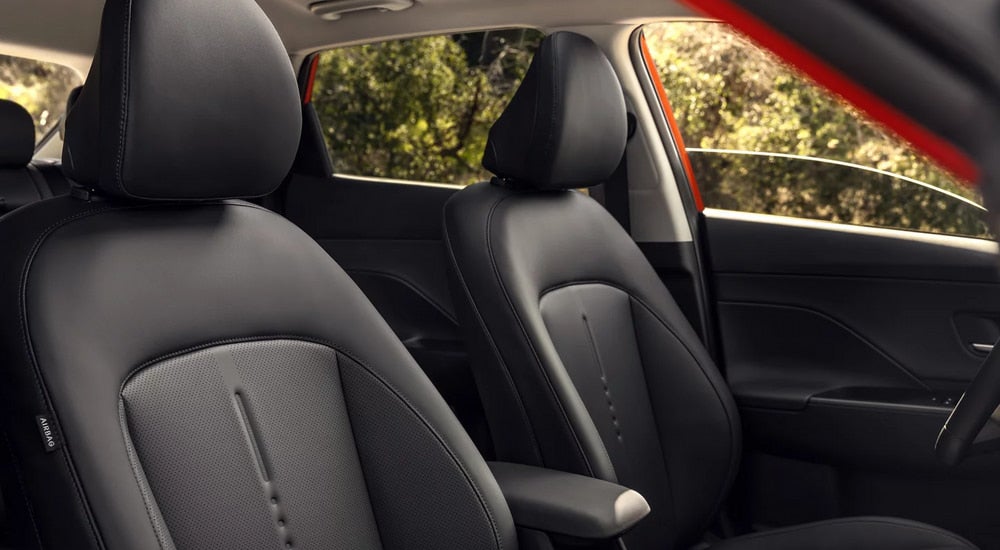
Black interior seating in a 2026 Hyundai Kona

A Generously Equipped Cabin

Being a subcompact SUV shouldn't mean substandard interior design and amenities. The 2026 Hyundai Kona isn't a holdover or a "settle for" vehicle; it's something you can drive for years, thanks in big part to a cabin that takes occupants seriously.

Maximum Space in a Small SUV

Do you think you'll be packed and cramped inside a tiny crossover? Think again, as the 2026 Kona outplays its class with 41.7 inches of front legroom and 38.2 inches of rear legroom. There is also 63.7 cu.ft. of cargo space—more than some compact SUVs offer. The SE and SEL Sport trims have high-quality cloth seats, while the SEL Premium and Limited use H-Tex leatherette.

With available features such as heated and ventilated front seats, dual-zone climate control, a power-adjustable driver's seat, and a leather-wrapped steering wheel, the 2026 Hyundai Kona can be surprisingly upscale. There are also optional ambient interior lights and second-row air vents, so kids or adults in the back are covered. Lastly, this year, Hyundai increased the size of the console tray to hold more of your personal effects and supplies.

Packed With Great Tech Features

Hyundai is known for offering some of the best automotive technology, and when you buy the 2026 Kona, you pay a little to get a lot. A 12.3-inch infotainment touchscreen, wireless Apple CarPlay and Android Auto, SiriusXM, HD radio, dual front and rear USB ports, a six-speaker sound system, and Hyundai's Bluelink Connected Care remote access are all standard, letting you listen to anything. 

All trim levels above the SE come with a wireless charging pad, and select trim levels have a massive 12.3-in digital gauge display. The Limited trim also includes built-in navigation, a Wi-Fi hotspot, Hyundai Digital Key, dynamic voice recognition, and an eight-speaker Bose audio system.

Onboard entertainment is paired with peace of mind from equally excellent safety technology. For 2026, Hyundai has made adaptive cruise control with stop-and-go standard on all Kona trims, and enhanced automatic emergency braking is also now a universal feature.

This even further enhances the safety profile of the Hyundai Kona, as these features join many other driver assistance systems, including lane-keeping assistance, blind-spot warnings, rear cross-traffic alerts, and driver attention warnings. You can add a 360-degree camera system, parking distance warnings, and even highway driving assistance to be in full control.
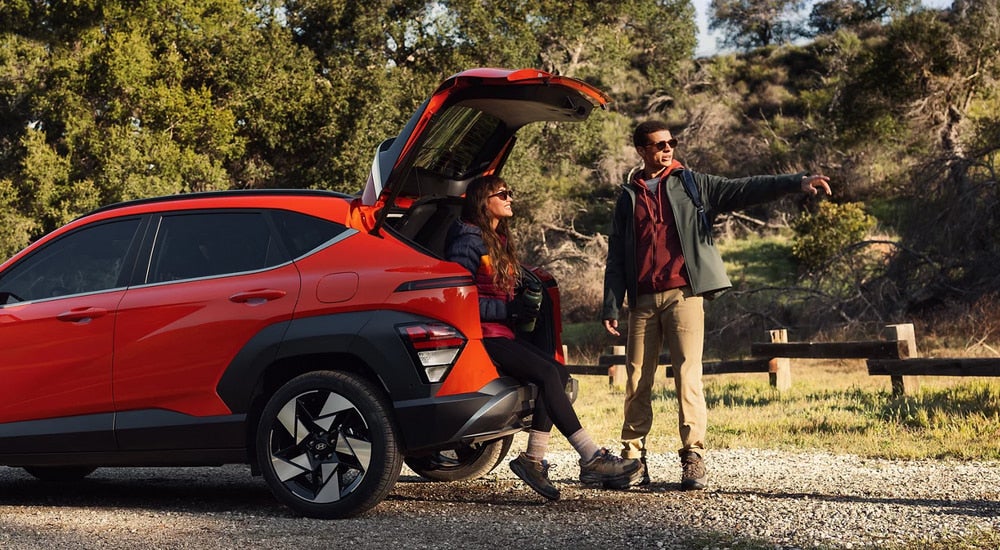
Two people getting ready for a hike next to an orange 2026 Hyundai Kona

A Functionally Stylish Exterior

There are many small SUVs out there, and—let's face it—a lot of them look the same. If you want to set yourself apart with a distinctive appearance, the 2026 Hyundai Kona delivers unique style alongside the features you need for everyday life.

Gorgeously Modern Aesthetics

The Kona is an energetic machine with the looks to match. The pointed nose, angled body lines, sloped back, and rear roof lip spoiler make it look like a vehicle ahead of its time. Each model is available in nine body colors, from the usual suspects like black and silver to eye-catching hues like orange, crimson, and light green.

Wheels range from 17 inches on the SE to 19 inches on the SEL Premium and Limited for superior traction, and each trim level has a unique wheel design. Most Konas have gloss-black mirrors to match the front grille, window trimming, and fender cladding.

Convenience and Amenities

The 2026 Hyundai Kona doesn't just look nice; it walks the walk with the necessary add-ons. The LED projector headlights, daytime running lights, combo tail lights, and high-mount rear stop light keep you visible to other drivers at any hour. Active grille shutters are standard, and most models have heated side mirrors with integrated turn signals. The Limited has a power sunroof and shade to let you bask in glorious weather.

Go Modern in the 2026 Hyundai Kona

A budget-friendly small SUV should never compromise on the things you want and need most. The 2026 Hyundai Kona does it again, offering a low price and high value at every turn. With Hyundai's leading coverage (which includes a ten-year, 100,000-mile powertrain warranty and a seven-year, unlimited-mileage perforation protection), you'll feel confident about getting a long-lasting vehicle, even if it's your first step into ownership.

Visit Rusty Wallace Hyundai to test-drive the 2026 Hyundai Kona and see why it's the ideal SUV for new and established drivers alike. We bring the same championship attitude to car sales as Rusty did to the race track, serving drivers in Knoxville and beyond with a world-class shopping experience. Trust our dealership for knowledgeable service, transparent pricing, no-hassle financing, and everything else you need to drive off in a new Hyundai Kona.
Posted in:

Related Posts

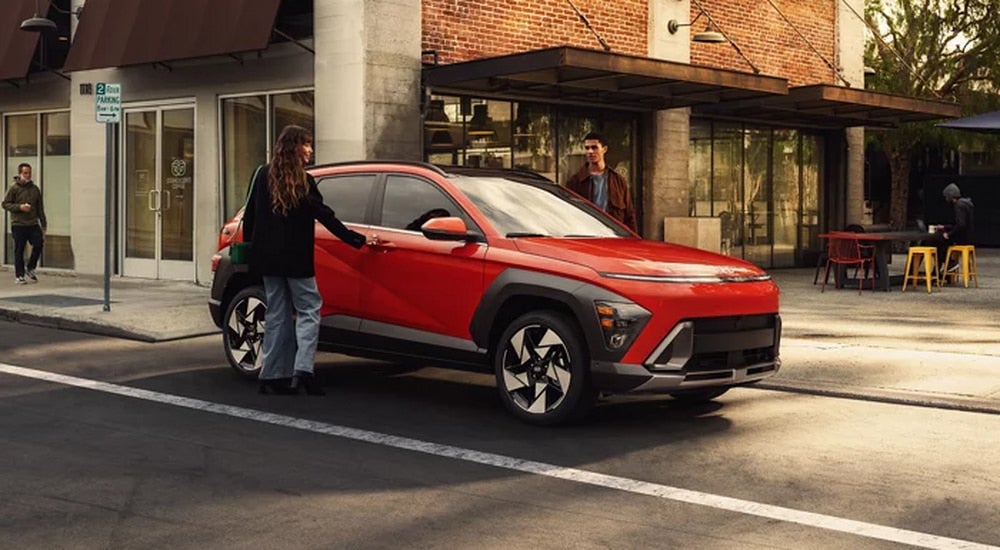
Orange 2026 Hyundai Kona parked outside of a shop in a city

Value Where It Counts: The 2026 Kona vs 2026 Toyota Corolla Cross

When shopping for a subcompact SUV, most drivers aren't chasing off-road bragging rights or race-track numbers. What genuinely matters is everyday value: how well a vehicle fits into real life. From commuting and errands to weekend trips and hauling cargo, the best vehicle is one that adapts to your needs and works harder for you day in and day out. So, how do you find an SUV like this? Shopping for a Hyundai Kona for sale means you're already one step closer, especially after comparing it to rivals like the 2026 Toyota Corolla Cross. The 2026 Kona exudes adaptability, offering tangible value through its modern design and feature-rich packaging, putting it leagues ahead of its Toyota rival. While both SUVs appeal to shoppers looking for practicality, the 2026 Corolla Cross relies heavily on its well-known name without delivering the innovation, interior flexibility, or advanced technology expected of a newer crossover. Hyundai's approach is markedly different (and far more value-driven) in the 2026 Kona, addressing drivers' needs where it matters most. With a closer look at those differences, here's how the 2026 Kona consistently outshines the 2026 Corolla Cross. more The Value in Interior Versatility Interior design isn't just about how a cabin looks; it's about how well it adapts to your daily routine. This is one of the most important areas where the 2026 Kona separates itself from the 2026 Corolla Cross. The Corolla Cross leans into its subcompact footprint without showcasing much ingenuity or thoughtful design. On paper, it even appears larger. The Corolla Cross measures 176.1 inches long and 64.9 inches tall, compared to the Kona's nimbler 171.3-inch length and 63.2-inch height. However, Toyota doesn't use that extra interior space to your advantage—especially not in the back seat or cargo area. Hyundai, by contrast, makes every inch count. Toyota treats the rear seat as an afterthought in the Corolla Cross, with cramped legroom and a smaller passenger volume of just 93.8 cu.ft. The Kona tells a very different story. Hyundai proves a subcompact SUV can still be spacious, comfortable, and family-friendly, with a passenger volume of 101.2 cu.ft., 38.2 inches of rear legroom, and an impressive 63.7 cu.ft. of cargo space. The Corolla Cross tops out at only 46.9 cu.ft., making the Kona far better suited for hauling groceries, luggage, sports gear, and other essentials. Details That Shine for Hyundai The Kona's spacious cabin sets the stage for thoughtful design details that elevate every drive without inflating the price. Unfortunately, that same attention to value is missing in the Corolla Cross, where Toyota limits comfort features and forces buyers to pay more for basic upgrades. The 2026 Corolla Cross has a noticeably oversimplified interior. Top trims like the XLE have Toyota's SofTex seating, but desirable features such as heated front seats and a heated steering wheel are limited to more expensive all-wheel-drive models. A moonroof and a power liftgate also cost extra, further eroding the Corolla Cross's value proposition. The 2026 Kona flips that script entirely, as its four-trim lineup is generously equipped from the start. Its mid-tier and top-tier trims offer H-Tex leatherette seating, heated and ventilated front seats, a leather-wrapped steering wheel, ambient interior lighting, and a power sunroof—features that either cost extra or aren't available at all in the Corolla Cross. Moreover, the Kona Limited delivers these upgrades without forcing drivers into expensive add-on packages, reinforcing Hyundai's commitment to providing tangible, everyday value. A Smarter, More Intuitive Interface Modern drivers expect their vehicles to keep pace with the technology they use daily, from smartphones and navigation apps to entertainment and driver assistance tools. Technology is another area where the 2026 Kona demonstrates a forward-thinking, value-driven mindset, while the Corolla Cross reveals Toyota's slower approach to tech-related innovation. Digital Landscapes The 2026 Corolla Cross offers either an eight-inch or 10.5-inch infotainment touchscreen, both of which feel undersized when compared to the Kona's expansive setup. In fact, 2026 marks the first time the Corolla Cross even offers a 10.5-inch screen—a telling sign of Toyota's tech-averse approach in an SUV that made its American debut in 2022. The 2026 Kona, meanwhile, rolls off Hyundai's production line with a 12.3-inch infotainment touchscreen that complements an available 12.3-inch instrument cluster. This seamless digital landscape delivers clear visuals, intuitive smartphone integration, real-time navigation, and a more premium feel overall. While the Corolla Cross offers wireless Apple CarPlay and Android Auto, its smaller screens and less intuitive interface make the experience feel dated. Hyundai leverages the Kona's larger digital landscape across its trims, from the SE and SEL Sport to the SEL Premium and Limited. Every trim includes HD radio and SiriusXM, while the Limited elevates the experience with an eight-speaker Bose Premium audio system, Dynamic Voice Recognition, and enhanced connectivity and entertainment features that Toyota simply doesn't match. Technology Overall Toyota's oversight gives the 2026 Kona plenty of time to shine as the more technologically advanced and intuitive model. As a result, the gap between the 2026 Corolla Cross and 2026 Kona grows significantly and becomes impossible to ignore, especially when you look at the full tech experience. Toyota's conservative approach leaves the Corolla Cross behind the curve, even as a newer crossover. Hyundai, on the other hand, clearly prioritizes the driver's experience, focusing on usability, clarity, and innovation. For everyday driving, Hyundai realizes that better technology isn't about flash, but rather ease of use and staying connected without frustration. The Kona's digital landscape feels purpose-built for modern life, leaving the Corolla Cross to continue its never-ending need to play catch-up. Confidence in the Driver's Seat Hyundai and Toyota both prioritize your safety behind the wheel, yet their approaches differ significantly. Toyota equips the Corolla Cross with essential driver assistance features but limits advanced technologies to higher-tier trims, forcing buyers to spend more for peace of mind that comes standard in rivals like the 2026 Kona. Hyundai's approach is more inclusive and value-oriented. The 2026 Kona features Hyundai SmartSense, a suite of driver assistance tools that outpaces Toyota Safety Sense 3.0. SmartSense equips the 2026 Kona with a Blind Spot Collision-Avoidance Warning, Rear Cross-Traffic Collision-Avoidance Assist, Forward Collision-Avoidance Assist with Pedestrian Detection, Cyclist and Junction Turning Detection, and Direct Oncoming. The suite also includes Lane Following and Lane Keeping Assist, Driver Attention Warning, Safe Exit Warning, and High Beam Assist. The 2026 Corolla Cross doesn't offer anything comparable to the Kona's Safe Exit Warning, Remote Smart Parking Assist, or Highway Driving Assist. Instead, Toyota maintains its tech-averse approach, requiring drivers to spend more on upgrades that should be standard: blind-spot and rear cross-traffic monitoring, rear parking assist, and rear automatic braking. The 2026 Kona Leads in Everyday Value The 2026 Corolla Cross is functional and aligns with Toyota's reputation for reliability, but it leans too heavily on familiarity and oversimplification. Its limited interior space, smaller cargo capacity, modest digital landscape, and piecemeal upgrades reveal Toyota's ongoing oversight. This becomes even more apparent alongside rivals like the 2026 Kona, which excels in providing everyday value where drivers feel it most. The 2026 Kona is a modern SUV that defies expectations, from its interior versatility and cargo-friendliness to its advanced technologies, premium design details, and an industry-leading warranty that extends to ten years or 100,000 miles. It's the value you deserve because Hyundai doesn't ask you to compromise or pay extra for essentials; instead, Hyundai designs the 2026 Kona as a smarter, more adaptable SUV designed for real life.